If you’ve ever told someone you run, there’s a good chance you’ve heard the response: “Isn’t that bad for your knees?” It’s a common belief. Running is repetitive. It’s higher impact than walking. And knee pain is something many people worry about. But when we look at the research, that fear doesn’t hold up.
According to Stanford, recreational runners tend to have lower rates of knee osteoarthritis compared to people who don’t run at all. So if running isn’t automatically damaging your knees, who does this myth stick around?
Running Itself Isn’t The Problem
Most runners who develop knee pain don’t do so because running is inherently harmful. More often, it’s related to how training progresses.
Common patterns we see include sudden increases in mileage, adding speed work too quickly, or returning to running after time off without gradually rebuilding tolerance.
Your knees are designed to handle load, what they don’t respond well to is rapid change. When loading progresses gradually and the surrounding muscles are strong enough to support it, running can actually support joint health.
How Running Can Support Knee Health
Joints adapt to the demands placed on them. With appropriate loading, running can:
- Help maintain healthy cartilage through consistent, moderate stress
- Strengthen the muscles that support and stabilize the knee
- Improve bone density
- Promote circulation and joint lubrication
Movement, when dosed correctly, is beneficial. Problems tend to arise when the dose exceeds what the body is prepared for.
Why Knee Pain Shows Up
When runners come into the clinic with knee pain, we rarely find that the knee itself is the only issue.
Often there are contributing factors such as:
- Weakness in the hips or glutes
- Limited ankle mobility
- Poor trunk control
- Training progression that outpaced tissue adaptation
The knee ends up absorbing more stress than it should, even though the root cause may be elsewhere. That’s why simply resting until pain goes away doesn’t always solve the problem long term.
How Physical Therapy Helps Runners
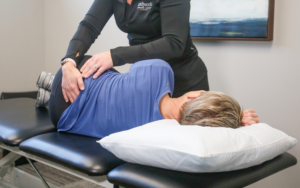
At Bodyworks Physical Therapy, our goal isn’t to tell runners to stop running. It’s to help them run well and continue doing it long term. We regularly help patients navigate knee pain and other orthopedic conditions that interfere with training.
That usually starts with a thorough evaluation. We look at strength, mobility, control, and how symptoms respond to specific movements. From there, we build a plan that supports the knee rather than just calming it down temporarily.
Treatment may include:
- Targeted strengthening for hips, quads, and core
- Improving ankle mobility
- Addressing movement patterns that increase stress on the knee
- Gradually progressing load in a way the body can tolerate
The goal is to restore confidence and build capacity, not create fear around movement.
A Smarter Approach to Running
If you want to protect your knees while running, focus on consistency and progression. Gradually increase mileage, strength train regularly, and pay attention to persistent or worsening pain rather than ignoring it.
Mild soreness can be normal, especially when training changes. Ongoing, sharp, or escalating pain is a sign that something needs to be adjusted.
What Runners Should Take Away From This
Running is not automatically bad for your knees. Poor preparation, rapid changes in training, and unaddressed weaknesses are much more likely to contribute to pain.
With the right progression and support, running can be part of a healthy, long-term lifestyle. And if knee pain is starting to interfere with your training, getting clarity early can help you stay active rather than stepping away from something you enjoy.
If you’re dealing with knee pain or want guidance on running smarter, our team at Bodyworks is here to help.